Know your rights and protect your privacy: What citizens need to know about reentering the US

Editor's Note
Returning to the U.S. from a trip abroad and going through the immigration and customs process can be stressful and time-consuming on the best of days. As such, many travelers enjoy using Mobile Passport or Global Entry to speed up the process. However, Bloomberg recently obtained data through a public records request that shows travelers have been losing Global Entry at an elevated rate since the start of 2024.
Global Entry is a trusted traveler program that requires applicants to undergo an interview with a U.S. Customs and Border Protection agent and a background check against criminal, law enforcement, customs, immigration, agriculture and terrorist records. And according to the CBP website, "Any violation of the program’s terms and conditions will result in the appropriate enforcement action and termination of the traveler’s membership privileges."
Bloomberg reports that most trusted traveler program revocations are due to criminal charges, agricultural violations or an attempt to bring a gun through a TSA checkpoint. Even so, the recent increase in Global Entry revocations is yet another sign of tightening border scrutiny. Combined with the rise in instances where travelers have been stopped for additional questioning or searches by border agents, many travelers are understandably wondering about their rights and what they should expect when reentering the U.S.
It's important to note that the vast majority of U.S. citizens returning to the country get through customs without issue or incident. However, being stopped can happen to anyone. So, as the Trump administration continues to target U.S. entry points with increased searches, detentions and deportations, it's important to know your rights as a U.S. citizen and how you can protect yourself.
Can a US citizen be stopped at the border?
U.S. CBP officers are allowed to stop anyone, including U.S. citizens, at the border to determine whether someone can lawfully enter the country. Officers can also search belongings for illicit materials (such as narcotics or other contraband). This can involve being pulled aside to answer additional questions or undergo bag searches, device searches, or — in extreme cases — even further physical searches.

CBP claims that travelers don't have the right to an attorney during these inspections.
While U.S. citizens are subject to CBP inspections, they cannot be denied entry into the country. According to the American Civil Liberties Union, "If you are a U.S. citizen, you need only answer questions establishing your identity and citizenship, although refusing to answer routine questions about the nature and purpose of your travel could result in delay and/or further inspection."
Keep your passport easily accessible until you leave the airport, in case you are stopped and asked to answer additional questions about your identity and citizenship. If you are especially concerned about being stopped or potentially detained, it's a good idea to have the name and number of a lawyer written down in case of an emergency.

Can CBP agents search your phone or other devices?
The U.S. government states that the search of cellphones, laptops or other electronic devices falls under the same authority as general searches for contraband. Some organizations, such as the ACLU, state that device searches are a "contested legal issue," and there are a variety of court cases in different states that set limits for device searches at the border. However, since no national standard has yet been established by the Supreme Court or Congress, CBP currently operates under the belief that device searches are permissible in order to protect national security and prevent contraband from entering the country.
According to the ACLU, U.S. citizens are not required to unlock their devices for officers or provide any passwords. However, border agents can confiscate those devices for further inspection if you do not comply, and you may be subject to additional questioning and delays getting through customs. If your devices are seized for any reason, make sure you get a receipt for your property.
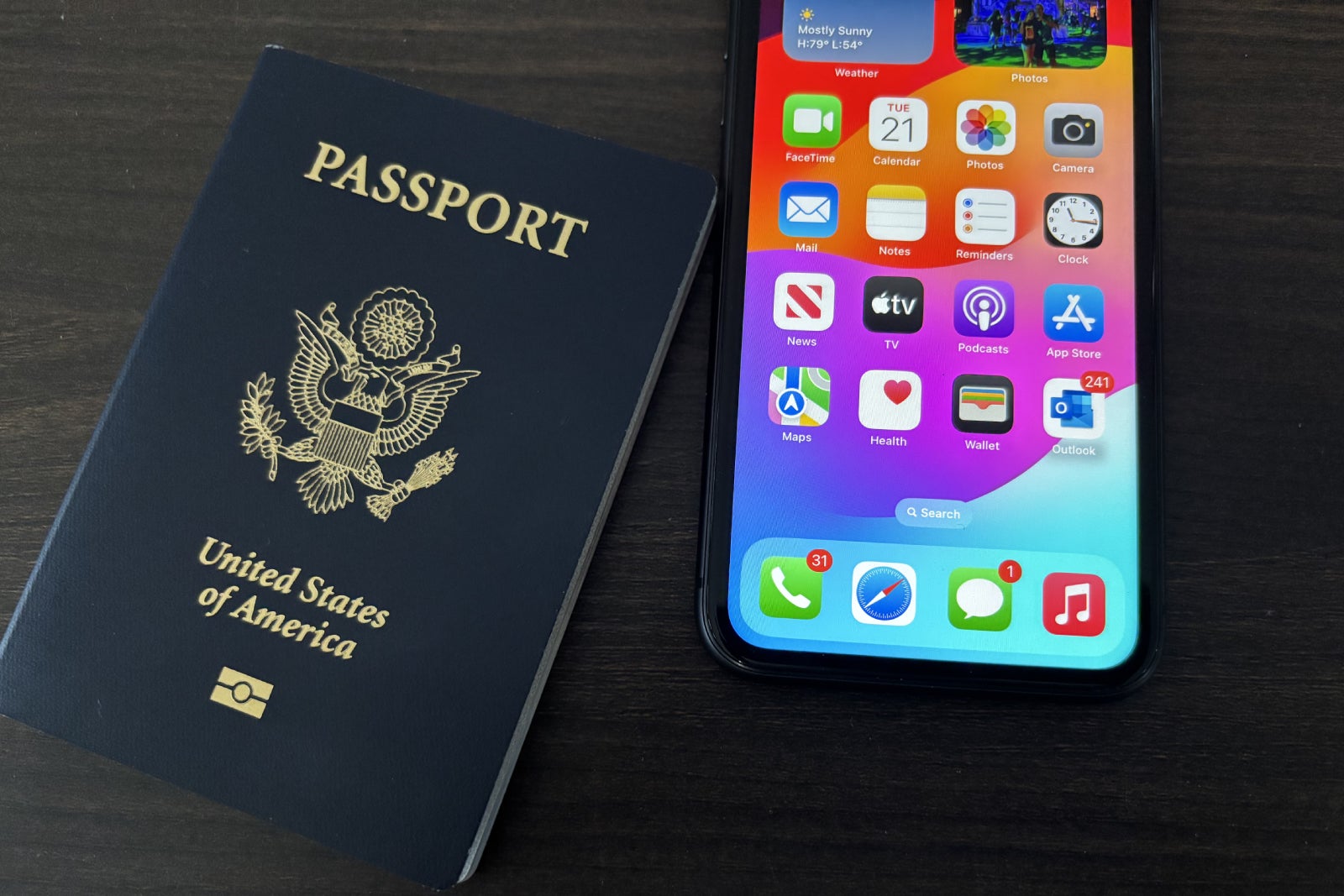
According to the CBP website, officers may perform a basic device check — conducted manually by a border agent — or a more advanced search with special equipment. Advanced searches require a reasonable suspicion of a crime or a national security concern, and a senior CBP manager must approve the procedure. The CBP claims "less than 0.01 percent of arriving international travelers encountered by CBP at a port of entry had their electronic devices searched" in 2024.
While increased coverage of device searches (and the decisions made by border agents after these searches) has certainly highlighted an increased concern about the Trump administration's balancing between border security and individual liberties, Deputy Director of the ACLU Speech, Privacy, and Technology Project Esha Bhandari pointed out in an ACLU At Liberty podcast that device searches are not unique to the current administration.
"These device searches have been done across administrations, and they’ve been rising across administrations," Bhandari said. "But I think we’re seeing renewed attention now because of this sense that the government might use these impermissible factors, these impermissible reasons, to exclude people just because they don’t like how they think or express themselves."
Should you be concerned about digital privacy when traveling?
The stories about device searches getting the most coverage in the news have involved non-U.S. citizens. So some travelers who are citizens may wonder: Should I care about digital privacy when traveling if this isn't currently affecting most U.S. citizens?
Your devices are essentially a digital lockbox of everything you've ever said or done. They can provide access to highly personal information that you may prefer to keep private — be it demographic information, your religious and political beliefs, health information, work conversations, or even just your hot takes on the newest season of "The Last of Us."

"It’s one thing to say, you know, 'We got a warrant and we’re looking for a very particular limited thing for something we’re investigating,'" said Bhandari. "But if you’re just rummaging through, think about how much is subject to misinterpretation. Think about how much is gonna be seen out of context."
It's not irrational to want to keep your digital data private whenever possible, and U.S. citizens have a right to that privacy from the government in the form of protection against unreasonable searches and seizures. While the U.S. government may consider device searches (with or without a warrant) at the border a reasonable search, it's fair to be concerned about any entity — including the government — having full access to private data that can be weaponized against you or people you are connected to.
How to protect your privacy when reentering the country
If you're concerned about protecting your data and privacy in this era of tightening border scrutiny and political uncertainty, here are a few simple steps you can take when traveling.
Travel with as few devices as possible
One easy way to protect your privacy on your devices when you travel is to simply leave them at home.
"If you don’t have information on you when you cross the border, they can’t search it," said Daniel Kahn Gillmor, senior staff technologist at the ACLU, in the same At Liberty podcast.
Leaving everything behind may not be feasible, especially in an increasingly digital world where many of us communicate, navigate, take photos and pay for things with our smartphones. But take stock of what you are bringing with you. If you are going on vacation, you may want to leave your work laptop at home. Instead of taking your iPad for entertainment, pack an extra book or a device with less personal information on it (like a Kindle or gaming device kept in airplane mode).
Use encryption and remove biometric access to your device before traveling
Your smartphone likely has basic encryption via Android or iOS, but ensure all of your devices have encrypted storage (which will also protect you during your travels from other cyber concerns, so it's a win-win). Gillmor warns that your devices' encryption is only as strong as your passcodes.

U.S. citizens are not required to hand over passwords to unlock a device, but you can be compelled to use your biometrics. Turn off Face ID, remove fingerprint access and use a strong, unique passcode to lock your devices. If your phone's passcode is 000001 or your spouse's birthday, it might be time to change it.
Keep your devices on airplane mode when entering the country
Border agents are not supposed to search cloud-stored data; searches are only meant to access what is downloaded onto your devices' hard drives. Keeping your devices in airplane mode with Wi-Fi and Bluetooth disabled and disconnected from the cloud until you leave the airport can add an extra layer of privacy protection if you are pulled aside for a search.
If you are subjected to a device search, the CBP website states that an officer should request that you turn these features off before the search. However, if you have privacy concerns, it's best to avoid taking any chances and disable those features before entering the immigration and customs hall.
Remove sensitive data from your devices before you travel
If you are concerned about specific information on your devices — such as photos, sensitive work information, or private conversations — you might consider downloading that information to an encrypted external hard drive that you leave at home during your trip and then deleting it from your devices. Make sure to delete these items in full, as some devices have a temporary trash where items remain for a certain time frame. And even so, unless you reformat your device, a forensic search might still find these deleted items.
You can also take extra steps, such as logging out of your iCloud, Google or Outlook accounts to temporarily restrict what personal, private information is easily accessible via your devices.
For a more comprehensive guide to protecting your digital privacy, check out the Electronic Frontier Foundation — a nonprofit dedicated to defending civil liberties in the digital world.
Bottom line
While hundreds of thousands of individuals enter the U.S. daily without any complications, you never know when you might be pulled aside for additional questioning or searches. Reports of border agents stopping U.S. citizens — especially immigrants and members of minority groups — have increased since the Trump administration took office.
Have a plan for what you might do if approached for additional questioning or a device search. Will you consent to a device search and hand over your passcodes? Or will you refuse and accept the possibility of your devices being confiscated and returned to you at a later date? If you are detained for any reason, do you have the number of a lawyer you can call? If you're concerned about your digital privacy while going through a U.S. port of entry, the steps above can help protect you and your private data.
TPG featured card

Rewards
| 4X | Earn 4X Membership Rewards® points per dollar spent on purchases at restaurants worldwide, on up to $50,000 in purchases per calendar year, then 1X points for the rest of the year. |
| 4X | Earn 4X Membership Rewards® points per dollar spent at US supermarkets, on up to $25,000 in purchases per calendar year, then 1X points for the rest of the year. |
| 3X | Earn 3X Membership Rewards® points per dollar spent on flights booked directly with airlines or on AmexTravel.com. |
| 2X | Earn 2X Membership Rewards® points per dollar spent on prepaid hotels and other eligible purchases booked on AmexTravel.com. |
| 1X | Earn 1X Membership Rewards® point per dollar spent on all other eligible purchases. |
Intro offer
Annual Fee
Recommended Credit
Why We Chose It
There’s a lot to love about the Amex Gold. It’s a fan favorite thanks to its fantastic bonus-earning rates at restaurants worldwide and at U.S. supermarkets. If you’re hitting the skies soon, you’ll also earn bonus Membership Rewards points on travel. Paired with up to $120 in Uber Cash annually (for U.S. Uber rides or Uber Eats orders, card must be added to Uber app and you can redeem with any Amex card), up to $120 in annual dining statement credits to be used with eligible partners, an up to $84 Dunkin’ credit each year at U.S. Dunkin Donuts and an up to $100 Resy credit annually, there’s no reason that foodies shouldn’t add the Amex Gold to their wallet. These benefits alone are worth more than $400, which offsets the $325 annual fee on the Amex Gold card. Enrollment is required for select benefits. (Partner offer)Pros
- 4 points per dollar spent on dining at restaurants worldwide and U.S. supermarkets (on the first $50,000 in purchases per calendar year; then 1 point per dollar spent thereafter and $25,000 in purchases per calendar year; then 1 point per dollar spent thereafter, respectively)
- 3 points per dollar spent on flights booked directly with the airline or with amextravel.com
- Packed with credits foodies will enjoy
- Solid welcome bonus
Cons
- Not as useful for those living outside the U.S.
- Some may have trouble using Uber and other dining credits
- You may be eligible for as high as 100,000 Membership Rewards® Points after you spend $6,000 in eligible purchases on your new Card in your first 6 months of Card Membership. Welcome offers vary and you may not be eligible for an offer. Apply to know if you’re approved and find out your exact welcome offer amount – all with no credit score impact. If you’re approved and choose to accept the Card, your score may be impacted.
- Earn 4X Membership Rewards® points per dollar spent on purchases at restaurants worldwide, on up to $50,000 in purchases per calendar year, then 1X points for the rest of the year.
- Earn 4X Membership Rewards® points per dollar spent at US supermarkets, on up to $25,000 in purchases per calendar year, then 1X points for the rest of the year.
- Earn 3X Membership Rewards® points per dollar spent on flights booked directly with airlines or on AmexTravel.com.
- Earn 2X Membership Rewards® points per dollar spent on prepaid hotels and other eligible purchases booked on AmexTravel.com.
- Earn 1X Membership Rewards® point per dollar spent on all other eligible purchases.
- $120 Uber Cash on Gold: Add your Gold Card to your Uber account and get $10 in Uber Cash each month to use on orders and rides in the U.S. when you select an American Express Card for your transaction. That’s up to $120 Uber Cash annually. Plus, after using your Uber Cash, use your Card to earn 4X Membership Rewards® points for Uber Eats purchases made with restaurants or U.S. supermarkets. Point caps and terms apply.
- $84 Dunkin' Credit: With the $84 Dunkin' Credit, you can earn up to $7 in monthly statement credits after you enroll and pay with the American Express® Gold Card at U.S. Dunkin' locations. Enrollment is required to receive this benefit.
- $100 Resy Credit: Get up to $100 in statement credits each calendar year after you pay with the American Express® Gold Card to dine at U.S. Resy restaurants or make other eligible Resy purchases. That's up to $50 in statement credits semi-annually. Enrollment required.
- $120 Dining Credit: Satisfy your cravings, sweet or savory, with the $120 Dining Credit. Earn up to $10 in statement credits monthly when you pay with the American Express® Gold Card at Grubhub, The Cheesecake Factory, Goldbelly, Wine.com, and Five Guys. Enrollment required.
- Explore over 1,000 upscale hotels worldwide with The Hotel Collection and receive a $100 credit towards eligible charges* with every booking of two nights or more through AmexTravel.com. *Eligible charges vary by property.
- No Foreign Transaction Fees.
- Annual Fee is $325.
- Terms Apply.
Rewards Rate
| 4X | Earn 4X Membership Rewards® points per dollar spent on purchases at restaurants worldwide, on up to $50,000 in purchases per calendar year, then 1X points for the rest of the year. |
| 4X | Earn 4X Membership Rewards® points per dollar spent at US supermarkets, on up to $25,000 in purchases per calendar year, then 1X points for the rest of the year. |
| 3X | Earn 3X Membership Rewards® points per dollar spent on flights booked directly with airlines or on AmexTravel.com. |
| 2X | Earn 2X Membership Rewards® points per dollar spent on prepaid hotels and other eligible purchases booked on AmexTravel.com. |
| 1X | Earn 1X Membership Rewards® point per dollar spent on all other eligible purchases. |
Intro Offer
You may be eligible for as high as 100,000 Membership Rewards® Points after spending $6,000 in eligible purchases on your new Card in your first 6 months of Membership. Welcome offers vary and you may not be eligible for an offer.As High As 100,000 points. Find Out Your Offer.Annual Fee
$325Recommended Credit
Credit ranges are a variation of FICO® Score 8, one of many types of credit scores lenders may use when considering your credit card application.Excellent to Good
Why We Chose It
There’s a lot to love about the Amex Gold. It’s a fan favorite thanks to its fantastic bonus-earning rates at restaurants worldwide and at U.S. supermarkets. If you’re hitting the skies soon, you’ll also earn bonus Membership Rewards points on travel. Paired with up to $120 in Uber Cash annually (for U.S. Uber rides or Uber Eats orders, card must be added to Uber app and you can redeem with any Amex card), up to $120 in annual dining statement credits to be used with eligible partners, an up to $84 Dunkin’ credit each year at U.S. Dunkin Donuts and an up to $100 Resy credit annually, there’s no reason that foodies shouldn’t add the Amex Gold to their wallet. These benefits alone are worth more than $400, which offsets the $325 annual fee on the Amex Gold card. Enrollment is required for select benefits. (Partner offer)Pros
- 4 points per dollar spent on dining at restaurants worldwide and U.S. supermarkets (on the first $50,000 in purchases per calendar year; then 1 point per dollar spent thereafter and $25,000 in purchases per calendar year; then 1 point per dollar spent thereafter, respectively)
- 3 points per dollar spent on flights booked directly with the airline or with amextravel.com
- Packed with credits foodies will enjoy
- Solid welcome bonus
Cons
- Not as useful for those living outside the U.S.
- Some may have trouble using Uber and other dining credits
- You may be eligible for as high as 100,000 Membership Rewards® Points after you spend $6,000 in eligible purchases on your new Card in your first 6 months of Card Membership. Welcome offers vary and you may not be eligible for an offer. Apply to know if you’re approved and find out your exact welcome offer amount – all with no credit score impact. If you’re approved and choose to accept the Card, your score may be impacted.
- Earn 4X Membership Rewards® points per dollar spent on purchases at restaurants worldwide, on up to $50,000 in purchases per calendar year, then 1X points for the rest of the year.
- Earn 4X Membership Rewards® points per dollar spent at US supermarkets, on up to $25,000 in purchases per calendar year, then 1X points for the rest of the year.
- Earn 3X Membership Rewards® points per dollar spent on flights booked directly with airlines or on AmexTravel.com.
- Earn 2X Membership Rewards® points per dollar spent on prepaid hotels and other eligible purchases booked on AmexTravel.com.
- Earn 1X Membership Rewards® point per dollar spent on all other eligible purchases.
- $120 Uber Cash on Gold: Add your Gold Card to your Uber account and get $10 in Uber Cash each month to use on orders and rides in the U.S. when you select an American Express Card for your transaction. That’s up to $120 Uber Cash annually. Plus, after using your Uber Cash, use your Card to earn 4X Membership Rewards® points for Uber Eats purchases made with restaurants or U.S. supermarkets. Point caps and terms apply.
- $84 Dunkin' Credit: With the $84 Dunkin' Credit, you can earn up to $7 in monthly statement credits after you enroll and pay with the American Express® Gold Card at U.S. Dunkin' locations. Enrollment is required to receive this benefit.
- $100 Resy Credit: Get up to $100 in statement credits each calendar year after you pay with the American Express® Gold Card to dine at U.S. Resy restaurants or make other eligible Resy purchases. That's up to $50 in statement credits semi-annually. Enrollment required.
- $120 Dining Credit: Satisfy your cravings, sweet or savory, with the $120 Dining Credit. Earn up to $10 in statement credits monthly when you pay with the American Express® Gold Card at Grubhub, The Cheesecake Factory, Goldbelly, Wine.com, and Five Guys. Enrollment required.
- Explore over 1,000 upscale hotels worldwide with The Hotel Collection and receive a $100 credit towards eligible charges* with every booking of two nights or more through AmexTravel.com. *Eligible charges vary by property.
- No Foreign Transaction Fees.
- Annual Fee is $325.
- Terms Apply.